
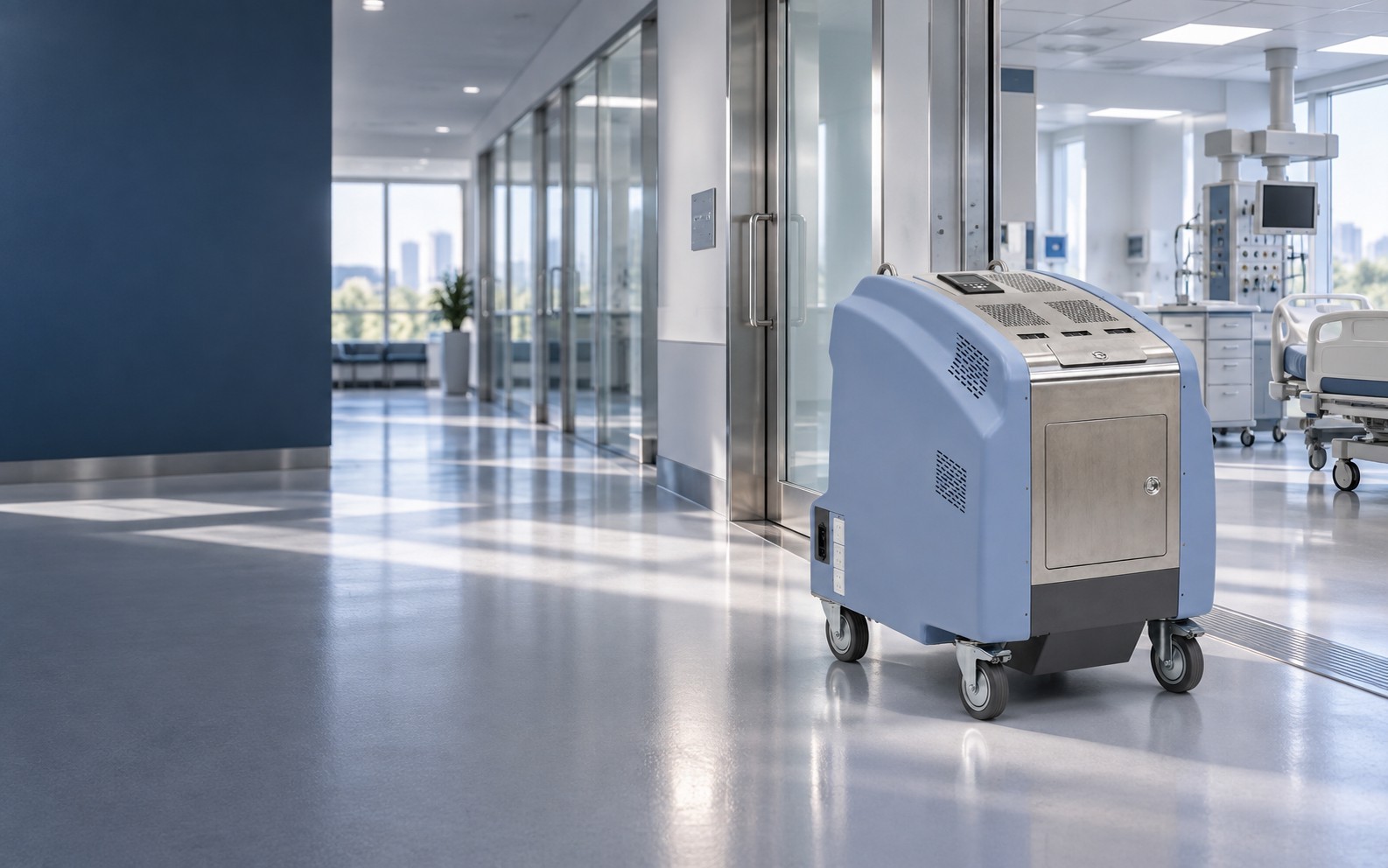
The revolution in environmental disinfection begins where manual contact cannot reach.
For decades, environmental treatment was bound by the limits of sight, access and direct contact. Sterozone breaks that limitation with a controlled, monitored oxidative cycle, developed to extend the reach, uniformity and performance of environmental disinfection.
More reach. More uniformity. A new standard of environmental performance.
See the solution →Not everything that can compromise an environment is visible.
Microorganisms and other unwanted agents can be present in gaps, joints, complex geometries and surfaces that are hard to treat uniformly. When these points stay out of reach, the impact can surface as contamination, rework, operational disruption, loss of trust, and costs that accumulate silently.
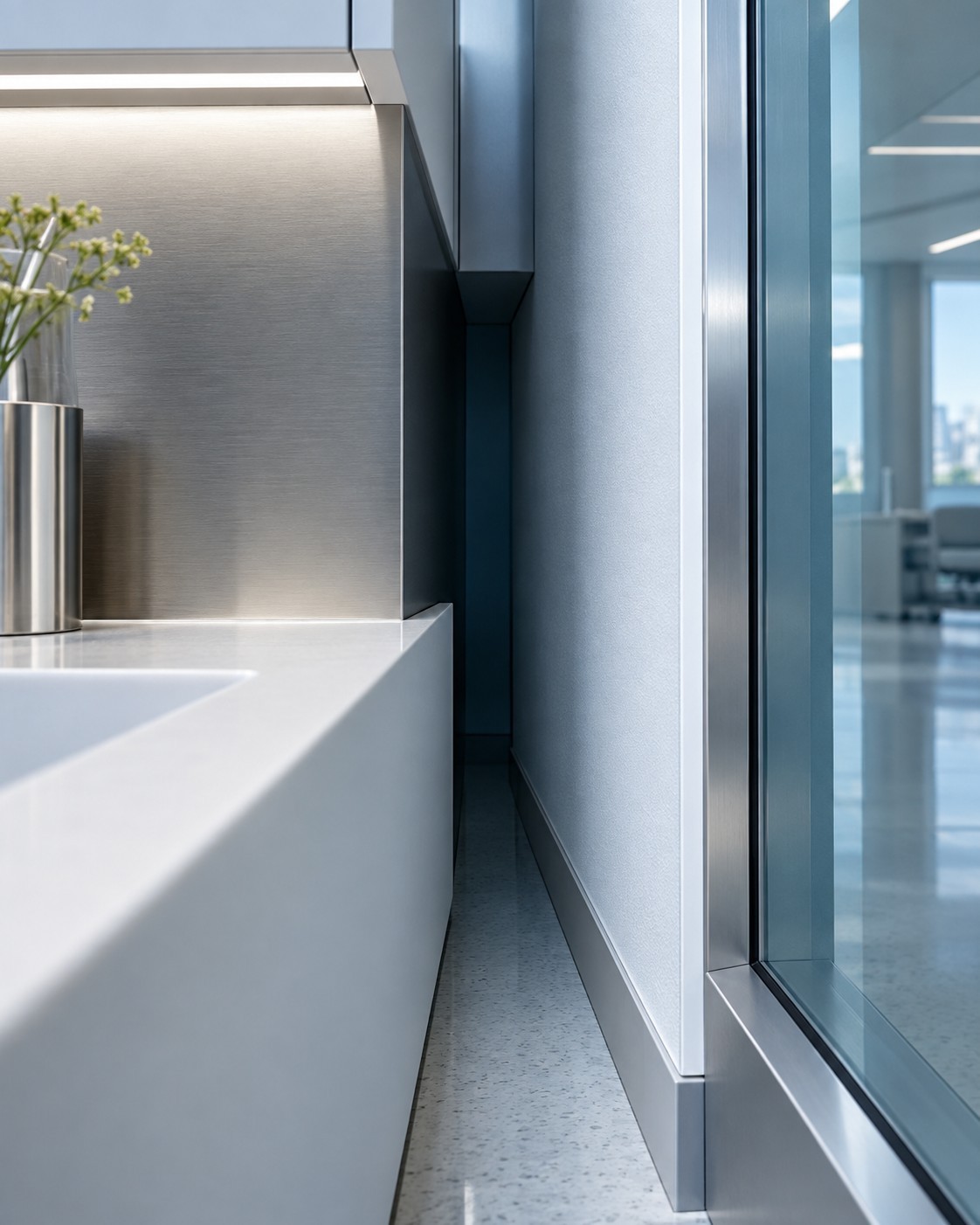
An oxidative cycle that distributes itself across the prepared environment.
Sterozone carries out a controlled oxidative cycle across the entire, previously prepared environment. Without depending on point-by-point manual application or a direct line of incidence, the process distributes itself across exposed surfaces and extends treatment uniformity across complex geometries and hard-to-reach areas.
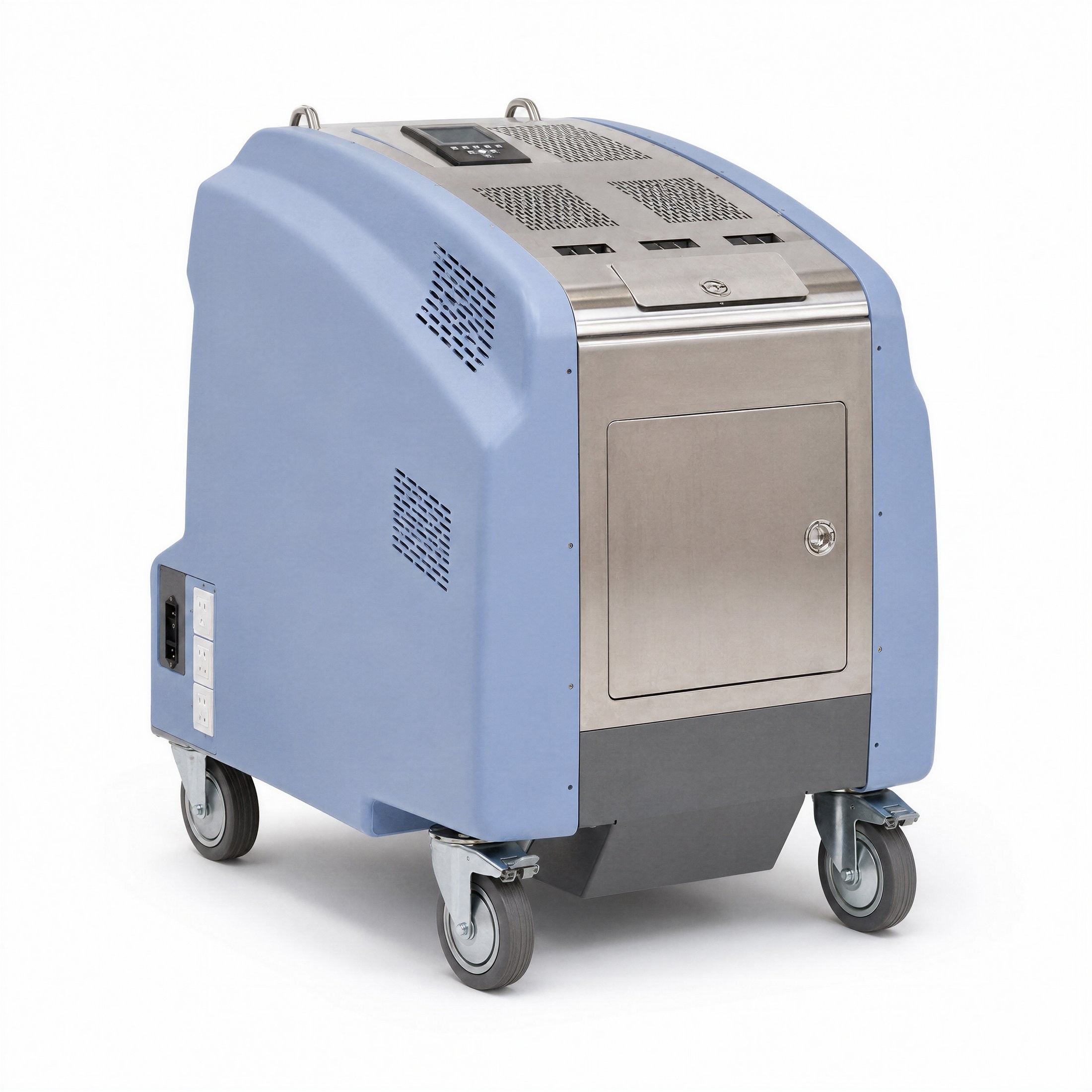

We don't deliver a machine. We deliver the complete cycle of care.
Sterozone brings together, in a single delivery, everything a demanding operation needs to treat its environments — from initial understanding to safe release. The equipment is the technological infrastructure of the solution, not the product itself: the client does not need to acquire, operate or maintain the equipment. Sterozone carries out the process from start to finish.
Microbial reduction evaluated in peer-reviewed research.
Sterozone technology is built on the AsepticSure® platform, evaluated in a peer-reviewed study published in the American Journal of Infection Control (Zoutman D, Shannon M, Mandel A., 2011;39(10):873-879). In a laboratory chamber, under the reference condition of 80 ppm ozone combined with 1% hydrogen peroxide, the study reported the following reductions on inoculated steel surfaces:
MRSA
60-minute exposure.
VRE
60-minute exposure.
E. coli
60-minute exposure.
C. difficile (spores)
90-minute exposure.
How to read these numbers: a log₁₀ reduction is a logarithmic scale — 1 log₁₀ equals 90% of microorganisms inactivated on the tested surface, 3 log₁₀ equals 99.9%, and 6 log₁₀ equals 99.9999%. These percentages refer to the fraction inactivated on the test surface, under the specific conditions of the assay: they do not represent total elimination, are not a clinical outcome, and are not a guarantee of results for any given environment.
This is laboratory microbiological evidence, not a clinical result — every real application requires its own protocol, sizing and validation, defined with the institution for that environment's specific characteristics. The corresponding technical parameters and documentation accompany every commercial proposal.
Source: Zoutman D, Shannon M, Mandel A. "Effectiveness of a novel ozone-based system for the rapid high-level disinfection of health care spaces and surfaces." Am J Infect Control. 2011;39(10):873-879. doi:10.1016/j.ajic.2011.01.012.
Precision in six phases.
Preparation
The environment is vacated, isolated, sealed and signed according to the defined protocol.
Positioning
Equipment and sensors positioned according to the environment's sizing.
Oxidative cycle
Ozone combined with low-concentration hydrogen peroxide, distributed in gas phase.
Neutralization
Residual ozone broken down into oxygen by the neutralization units at the end of the cycle.
Measurement
Air reading by detector before any release of the environment.
Release
Environment released below defined limits, per the criteria agreed with the institution.
Reach that transforms both the performance and the economics of the operation.
Sterozone's high performance comes from its ability to treat the environment more uniformly, predictably and with greater control, reducing dependence on repetitive manual intervention. The technology extends the reach of the process without requiring the operation to simply add more people, more steps and more hours to the existing model.
This new logic has the potential to reduce rework, rationalize resources, improve environment availability, and generate a meaningful impact on total cleaning and disinfection costs. When reach, consistency and efficiency are considered together, the technology also transforms the economics of the operation.
More reach. More uniformity. More control. More efficiency.
High-demand environments.
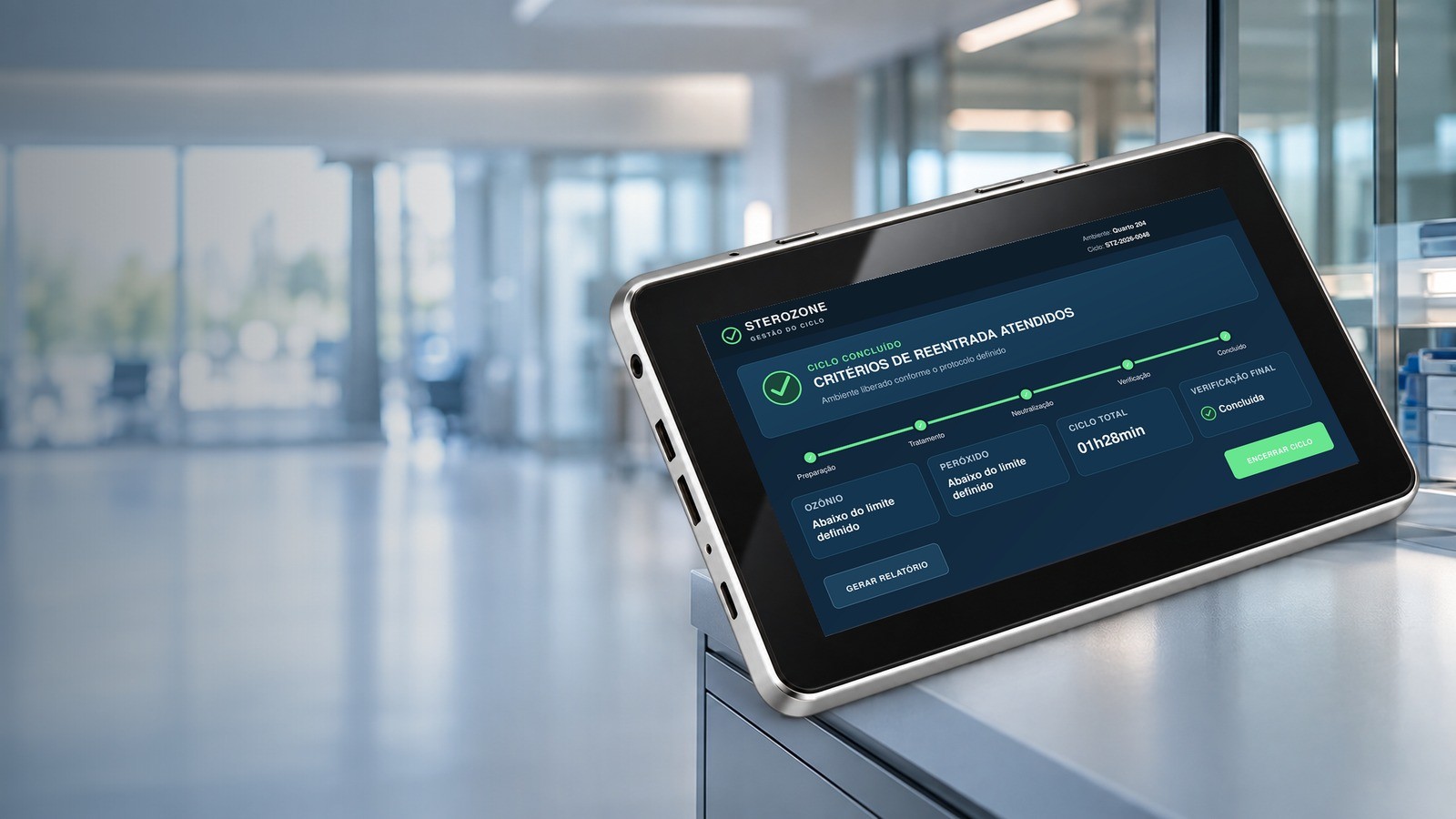
Safety built into the protocol.
Every application follows a sequence of preparation, isolation and monitoring carried out by a specialized team. The environment is prepared, sealed and signed before the cycle begins, and stays unoccupied throughout the operation.
Sensors follow the process in real time, with automatic-abort conditions defined for each stage. At the end, neutralization of residual ozone and detector-based air measurement confirm the re-entry criteria before the environment is released.
Every environment demands understanding before protocol.
Before defining any protocol, Sterozone takes the time to understand the environment's characteristics, its use, its routine and its specific requirements. That understanding is what guides how the technology is applied and makes it possible to build an approach suited to each operation.
Talk to Sterozone